Iven Betta
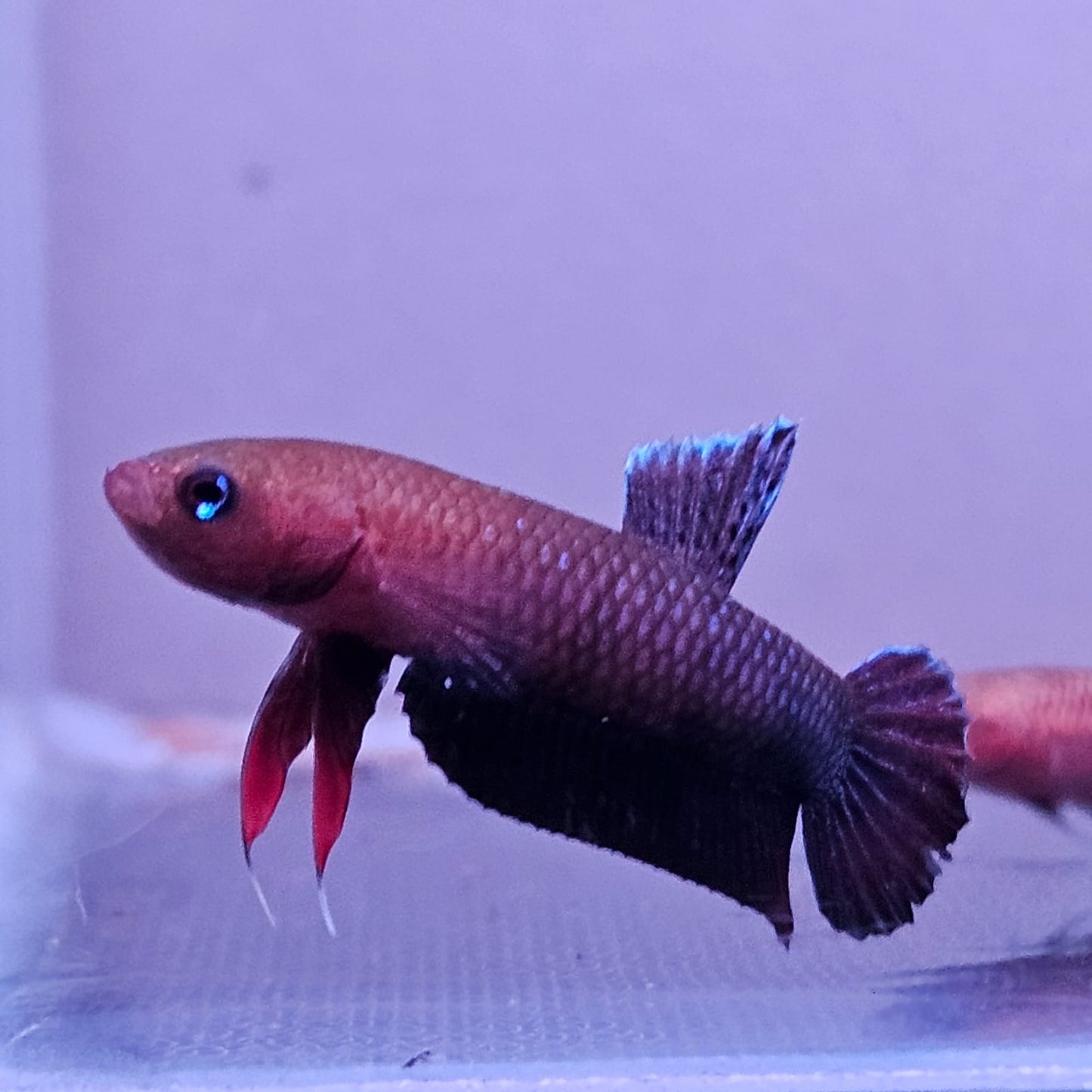
Betta cf. Persephone
Betta cf. Persephone
Couldn't load pickup availability
Betta cf. Persephone enters your aquarium as a rare, wild-type beauty with a distinctly dark, almost obsidian pattern that nods to its namesake goddess. At 30–35 mm, this compact betta remains a striking focal point while inviting a thoughtfully crafted, low-light palette that honors its peat swamp heritage.
Origin, rarity, and why it matters
Endemic lineage — this species is native to forested peat swamp pockets in southwestern Johor, Malaysia, around Ayer Hitam, Muar, and Kluang. Its type locality sits along Asian Highway No. 2 near Ayer Hitam. Critically Endangered on the IUCN Red List since 1996, its survival in the wild has been tightly linked to fragile, increasingly disturbed habitats threatened by plantation development. Choosing Betta cf. Persephone supports a lineage with a very limited distribution and a unique ecological story.
Natural habitat and water chemistry
- Habitat type: stenotopic peat swamp forests and sluggish streams with dense canopy cover.
- Water characteristics: tea-dark, humic-rich water with very low mineral content; pH typically 3.0–4.0 and negligible carbonate hardness.
- Light and structure: dim conditions prevail, with leaf litter, submerged roots, and fallen branches shaping shelter and microhabitats.
- Adaptability: in seasonal droughts, fish may survive within moist leaf litter, highlighting the importance of shelter and steady, gentle water movement.
Aquarium setup for success
- Tank mood and decor: a fully-decorated layout is welcome, but many keepers opt for minimal substrate to ease maintenance. Include driftwood, roots, and branches to carve shaded corners and hiding spots. Clay plant pots or piping can add extra shelter.
- Leaf litter and tannins: dried leaves enrich the habitat, foster beneficial microbe colonies, and provide a natural food source for fry as decomposition occurs. The tannins and related compounds also support the blackwater-style environment this species prefers.
- Plants and lighting: choose low-light aquatic plants such as Microsorum (Java Fern), Taxiphyllum (Java Moss), and Cryptocoryne spp.; floating vegetation is appreciated for additional cover. Aim for subdued lighting to reflect the native canopy.
- Water chemistry and filtration: maintain very soft, acidic water with minimal general hardness. Filtration should be gentle—strong currents can stress this dweller of slow waters. An air-powered sponge filter often aligns best with its natural conditions. If needed, water can be adjusted toward softness using appropriate methods, and slight acidification may be employed as described in care guidelines.
Care considerations and practical tips
- Diet and fry development: the natural leaf-litter microbe colonies provide a valuable secondary food source for fry, reinforcing the importance of a stable, low-flow blackwater setup. Monitor feeding to ensure all residents receive adequate nutrition in a dim environment.
- Water stability: because pH and hardness are extreme and water chemistry can drift, regular, small water adjustments with soft, acidic inputs help maintain the preferred conditions and reduce stress during acclimation.
- Ethical sourcing: given its status and restricted range, seek responsible breeders who prioritize welfare and conservation-minded practices.
Who this fish is ideal for
Betta cf. Persephone is best suited for experienced hobbyists who want to recreate a peat swamp-inspired biotope. It rewards care with a dramatic presence, refined color dynamics, and behaviors that respond to a shaded, soft-water environment. If you’re building a dedicated blackwater setup, this species provides a compelling centerpiece that reflects a unique corner of Southeast Asian freshwater biodiversity.
Share